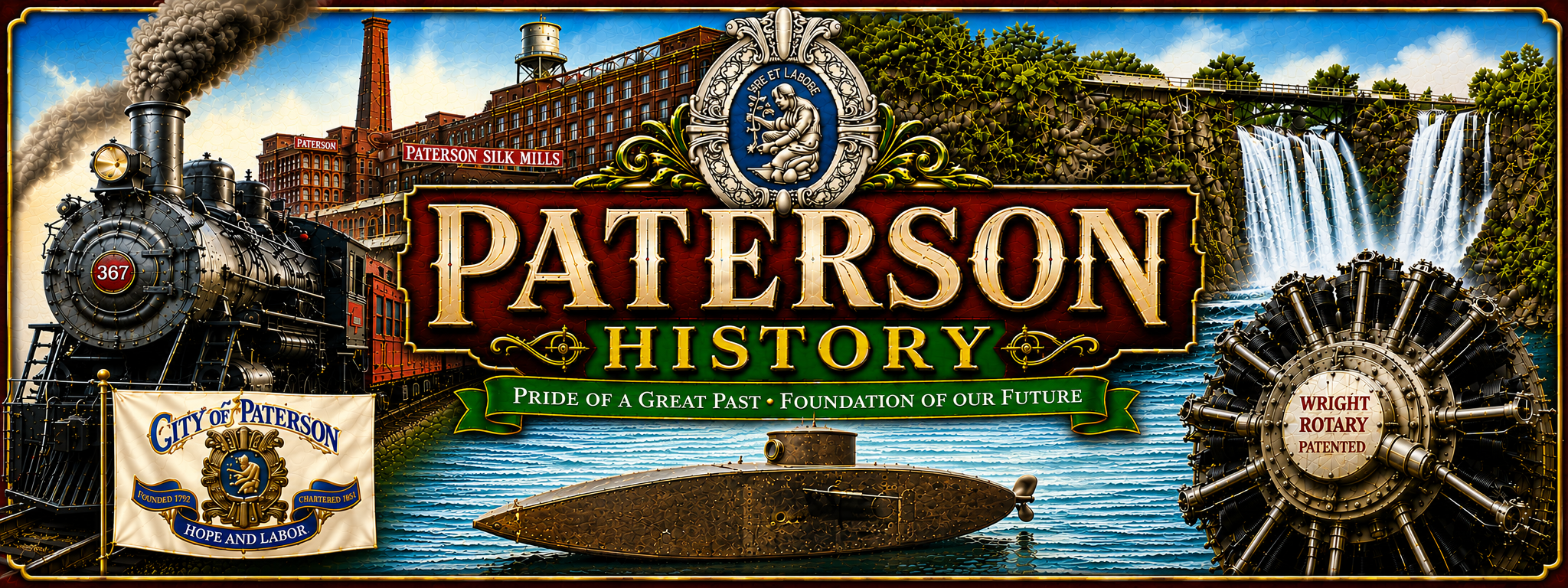


The Paterson Free Public Library System is one of New Jersey’s most historically significant public library systems. Established in 1885, it was the first free public library in New Jersey created by a vote of the people, marking an important milestone in the state’s educational and civic history. For more than 140 years, the library has served as a center for learning, literacy, and community life in Paterson.
Origins (1884–1885)
Before the establishment of the public library, Paterson residents relied on private subscription libraries, reading rooms, and organizational collections. These institutions generally required membership fees and were unavailable to much of the city’s working-class population.
In 1884, the New Jersey Legislature passed the General Library Act, enabling municipalities to establish tax-supported public libraries. Paterson quickly embraced the opportunity. On April 13, 1885, city voters overwhelmingly approved the creation of a free public library, making Paterson the first municipality in New Jersey to establish such a library through a public referendum.
The First Library
The first Paterson Free Public Library opened in 1885 in the Stimson House at 54 Church Street, between Market and Ellison Streets. The collection consisted of several thousand books, and public response was immediate. Within only a few years, the building proved too small for the rapidly growing collection and increasing patronage.
The Danforth Library
In 1890, philanthropist Mary Elizabeth Danforth Ryle, daughter of industrialist Charles Danforth, donated the family’s former residence at the northeast corner of Church and Market Streets to the city.
Mrs. Ryle not only gave the property but also financed extensive renovations to convert the mansion into a modern public library. She requested only that it be named the Danforth Memorial Library in honor of her father, one of Paterson’s leading industrialists and locomotive manufacturers.
The Great Fire of 1902
Disaster struck on February 9, 1902, when the Great Paterson Fire swept through downtown.
The Danforth Library was completely destroyed along with approximately 40,000 volumes. Remarkably, many books survived because they had been checked out by patrons at the time of the fire. The disaster also destroyed City Hall, churches, schools, businesses, and hundreds of homes.
Construction of the Present Danforth Memorial Library
Following the fire, Mary Elizabeth Danforth Ryle once again came to the library’s aid, contributing $100,000 toward construction of a new building.
A site at 250 Broadway was selected, and noted architect Henry Bacon designed the new library in the Beaux-Arts Classical Revival style. Bacon would later achieve international recognition as the architect of the Lincoln Memorial in Washington, D.C.
The new Danforth Memorial Library opened in 1905 and remains the headquarters of the Paterson Free Public Library System today. It is listed on the National Register of Historic Places and is considered one of Paterson’s architectural landmarks.
Growth of the Branch Library System
As Paterson’s population expanded during the early twentieth century, the library developed an extensive neighborhood branch system.
Eventually, seven branch libraries operated throughout the city, providing library service in each municipal ward. These branches brought books, educational programs, and reading opportunities within walking distance of thousands of residents, especially children and immigrant families.
Modernization
In 1986, the library established its Community Learning Center, expanding adult literacy, English-language instruction, and educational services.
During the 1990s, the library strengthened specialized collections reflecting Paterson’s diverse population, including:
- African American history
- Spanish-language materials
- Arabic and Islamic collections
- Filipino collections
These additions reflected Paterson’s evolution into one of America’s most ethnically diverse cities.
Reorganization of the Library System
In 1995, the library system underwent a major reorganization in preparation for computer automation and modern cataloging.
The number of neighborhood branches was reduced from seven to three:
- First Ward Branch
- Totowa Branch
- Southside Branch
Following damage caused by Hurricane Irene in 2011, the First Ward Branch closed. Library service later resumed on Temple Street through what is now the Northside Branch Library, located in the Christopher Hope Center.
The Digital Age
The library entered the digital era in 2002, when it received 35 public-access computers through a grant from the Bill & Melinda Gates Foundation. Since then, the system has expanded to provide:
- Free public internet access
- Wi-Fi
- Electronic books and audiobooks
- Online research databases
- Digital learning resources
- Technology training
Today, the Paterson Free Public Library serves thousands of residents each year through its physical collections, online resources, educational programming, and community partnerships.
Local History Collections
The Danforth Memorial Library houses one of northern New Jersey’s finest local history collections. Researchers have access to:
- Paterson city directories
- Historic newspapers
- Sanborn Fire Insurance Maps
- Historic photographs
- Genealogical resources
- Vertical files on neighborhoods, churches, schools, businesses, and prominent citizens
- Books and manuscripts documenting the history of Paterson and Passaic County
These collections make the library an indispensable resource for historians, genealogists, students, and preservationists studying the city’s rich industrial and cultural heritage.
Legacy
For more than a century, the Paterson Free Public Library System has fulfilled its founders’ vision of providing free access to knowledge for every resident. From its modest beginnings in the Stimson House to its magnificent Danforth Memorial building and neighborhood branches, the library has remained a cornerstone of education, civic engagement, and lifelong learning in the Silk City. Its history mirrors the growth of Paterson itself—from an industrial powerhouse to one of America’s most diverse urban communities—and continues to preserve the city’s remarkable story for future generations.