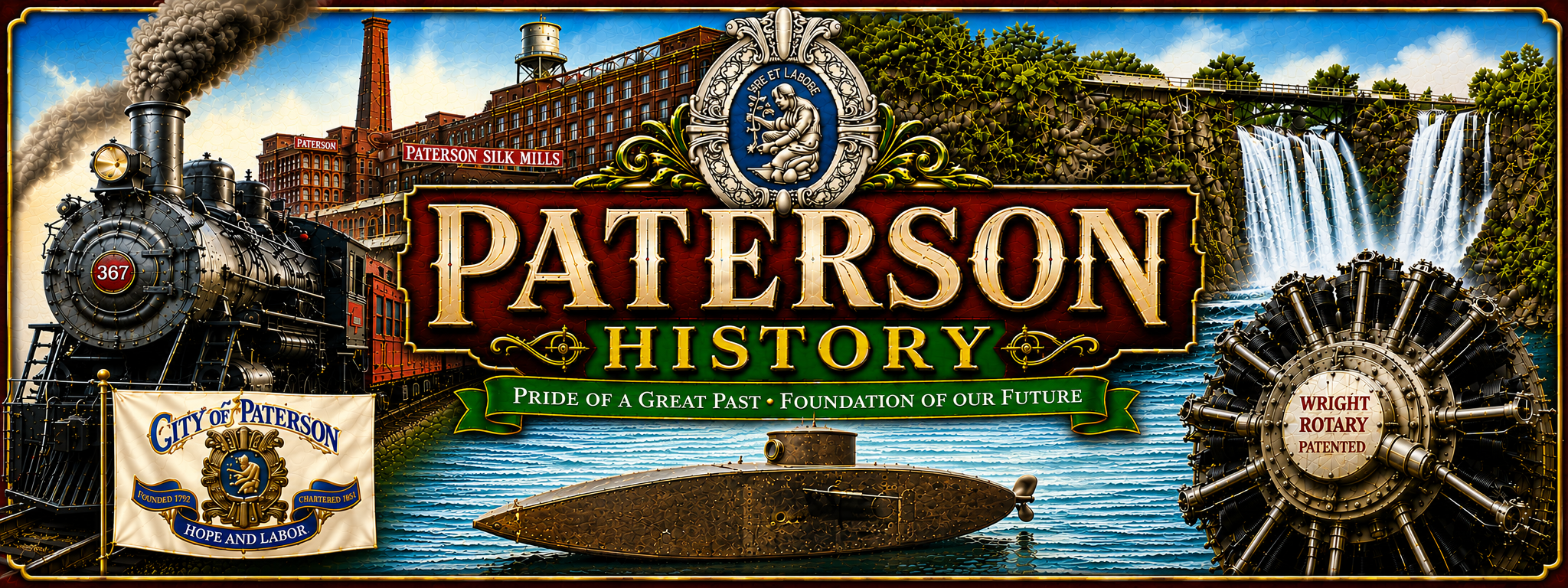


The history of Paterson begins long before the city was founded in 1792. Although Paterson is best known as America’s first planned industrial city, the land surrounding the Great Falls was settled by Dutch colonists more than a century earlier. Their farms, churches, roads, and family names profoundly influenced the development of present-day Paterson.
The Dutch Arrive
The first Europeans to settle the Passaic Valley were Dutch colonists from the colony of New Netherland during the second half of the seventeenth century. The area was inhabited by the Lenape, who called the Great Falls Totowa. Dutch traders were attracted by the fertile river valley, the fur trade, and the abundant water power of the Passaic River.
In 1678–1679, Dutch settlers acquired large tracts of land from the Lenape that became known as the Acquackanonk Patent. Farms stretched along both sides of the Passaic River from modern-day Passaic through Paterson and into Totowa.
Early Dutch Families
Many of Paterson’s oldest family names originated with these settlers:
- Van Houten
- Van Winkle
- Ryerson
- Godwin
- Van Gieson
- Post
- Berdan
- Van Bussum
- Van Riper
- Zabriskie
These names still appear throughout Passaic County on streets, schools, parks, cemeteries, and historic landmarks.
Dutch Farms Around the Great Falls
Before Paterson existed, the area around the Great Falls consisted of scattered Dutch farms.
Typical farms included:
- Stone houses
- Large barns
- Orchards
- Wheat and corn fields
- Livestock pastures
The Dutch established a road network connecting:
- Acquackanonk Landing (Passaic)
- Totowa (Great Falls area)
- Preakness
- Pompton
- Ringwood
Several of these colonial roads evolved into present-day streets.
Religion
The Dutch Reformed Church formed the center of community life.
The first settlers traveled several miles to worship at the Acquackanonk Dutch Reformed Church, organized in 1693.
As population increased, services were later held nearer the Great Falls, eventually leading to the establishment of the Old Dutch Reformed Church of Totowa, serving Dutch residents around Paterson.
The Van Houten House
Perhaps the best-known surviving Dutch landmark in Paterson is the Van Houten House.
Built in the eighteenth century, it is one of the oldest surviving structures in the city and represents the Dutch stone farmhouse tradition. Constructed of local sandstone with thick masonry walls and steep rooflines, it served generations of the Van Houten family before Paterson’s urban growth surrounded it.
The house is one of the city’s most significant reminders of its colonial Dutch heritage.
The Revolutionary War
During the American Revolution, Dutch farmers supported the Patriot cause.
The Great Falls area became an important military route between:
- Morristown
- Ringwood iron mines
- Acquackanonk
- Bergen County
Dutch families supplied food, horses, wagons, and militia service. Several local residents fought in New Jersey militia units.
The Birth of Paterson
Everything changed in 1792.
Alexander Hamilton selected the Great Falls as the site of the Society for Establishing Useful Manufactures (SUM), America’s first planned industrial city.
Many Dutch farms were gradually purchased for mills, worker housing, and canals.
Although industry transformed the landscape, Dutch families continued to own property for decades afterward.
Dutch Influence on Paterson
The Dutch left an enduring legacy:
- Colonial stone houses
- Dutch Reformed churches
- Family surnames
- Place names
- Property boundaries
- Agricultural traditions
- Early roads that became city streets
Neighborhoods surrounding Totowa, Westside Park, and parts of Paterson still reflect these colonial origins.
Dutch Place Names
Several local names derive from Dutch or Lenape usage preserved by Dutch settlers:
| Modern Name | Origin |
|---|---|
| Totowa | Lenape name preserved by Dutch settlers |
| Acquackanonk | Lenape place name adopted by Dutch colonists |
| Preakness | Lenape name used by Dutch settlers |
| Passaic | Lenape word recorded by Dutch explorers |
Dutch Heritage Today
Although Paterson became famous for its Irish, Italian, Jewish, Syrian, Lebanese, African-American, Hispanic, and other immigrant communities during the nineteenth and twentieth centuries, the city’s earliest European heritage remains unmistakably Dutch.
Historic reminders include:
- The Van Houten House
- Dutch colonial cemeteries
- Reformed church records
- Colonial road alignments
- Family names found throughout Passaic County
- Numerous artifacts preserved by the Passaic County Historical Society and local museums.