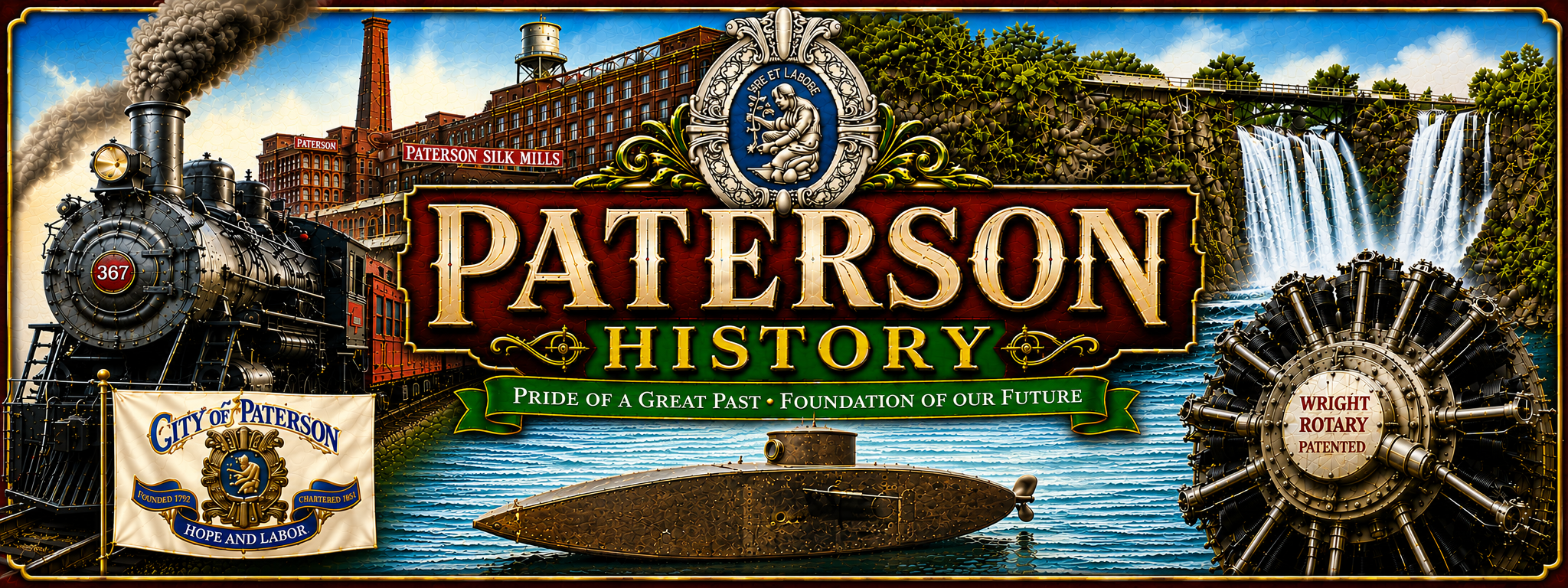


The Totowa Section is one of Paterson’s oldest and most historically significant neighborhoods. Located in the northwestern part of the city, it extends generally west of the Passaic River, southwest of West Broadway, and northeast of Preakness Avenue, bordering the Borough of Totowa. Today it is a diverse residential and commercial neighborhood, but its history stretches back to the earliest Dutch settlement of Passaic County.
Native American Origins
Long before European settlement, the area was occupied by the Lenape (Delaware) Indians. The word “Totowa” is believed to come from a Lenape term associated with the Great Falls of the Passaic River, often interpreted as meaning “between the mountains and the water” or referring to the area around the falls. The Great Falls served as an important fishing and gathering place for centuries before the arrival of European settlers.
Dutch Settlement
By the late seventeenth century, Dutch settlers had established farms throughout what became known as the Totowa Patent, a large tract of land that included present-day Totowa Borough and much of Paterson’s First and Second Wards. Families bearing names such as Van Houten, Van Winkle, Van Gieson, Ryerson, Post, and Godwin owned extensive farms throughout the area.
Early roads followed Native American trails. One of the most important was the Old Totowa Road, connecting the Great Falls with Preakness, Pompton, and Ringwood. Another was the Old York Road (King’s Highway), which crossed the Passaic River near present-day Broadway and linked northern New Jersey with Newark and New York.
The Dutch Church of Totowa
One of the neighborhood’s earliest landmarks was the Old Dutch Reformed Church of Totowa, organized in the eighteenth century near the Great Falls. The congregation served Dutch farming families scattered throughout the Totowa Patent and became an important religious and community center during colonial times.
During the American Revolution, many local residents supported the Patriot cause, and the roads through Totowa carried troops and supplies moving between northern New Jersey and the Hudson Valley.
Growth During the Industrial Revolution
The founding of Paterson in 1792 transformed the rural Totowa area. Alexander Hamilton’s vision for an industrial city centered on the Great Falls attracted workers and manufacturers, although much of the Totowa Section remained farmland well into the nineteenth century.
As Paterson expanded, residential neighborhoods gradually spread westward. The extension of horse-car lines and later electric streetcars along Union Avenue and Totowa Avenue encouraged housing development, bringing workers closer to the city’s silk mills, locomotive works, and machine shops.
By the late nineteenth century, many farms had been subdivided into residential lots, creating streets lined with Victorian and early twentieth-century homes.
Immigration and Community Life
The Totowa Section became home to successive waves of immigrants.
During the late nineteenth and early twentieth centuries, large numbers of Italian-American families settled in the neighborhood. They established churches, neighborhood businesses, social clubs, and small family-owned stores, particularly along Union Avenue, which became the area’s commercial heart.
After World War II, the neighborhood remained largely residential while continuing to support local businesses serving nearby residents.
Beginning in the late twentieth century, new immigrant communities arrived, including residents from Peru, other Latin American countries, and Bangladesh. Today Union Avenue reflects this diversity with Peruvian restaurants, Hispanic businesses, Bengali grocery stores, clothing shops, and community institutions, while retaining a longstanding Italian presence.
Parks and Landmarks
The Totowa Section contains several important recreational and historic sites, including:
- Westside Park, designed during Paterson’s era of park expansion.
- Colonial Village, one of Paterson’s notable residential developments.
- Brooks Sloate Terrace, a major apartment complex.
- Commercial districts along Union Avenue and West Broadway, which have served neighborhood residents for generations.
A Changing Neighborhood
Like many urban neighborhoods, the Totowa Section experienced demographic and economic changes after World War II. Single-family homes were often converted into two-family residences, reflecting changing housing needs. Despite these changes, many early twentieth-century homes remain, preserving much of the neighborhood’s historic character.
The Totowa Section Today
Today, the Totowa Section is one of Paterson’s largest neighborhoods and remains a vibrant example of the city’s continuing evolution. Historic Dutch roots, Italian-American traditions, and newer Hispanic and Bangladeshi communities have combined to create one of Paterson’s most culturally diverse neighborhoods. Union Avenue continues to serve as the neighborhood’s commercial and social center, while its parks, churches, and historic streets reflect more than three centuries of local history.
Timeline
| Year | Event |
|---|---|
| Pre-1600s | Lenape people occupy the Totowa area. |
| 1690s | Dutch settlers establish farms in the Totowa Patent. |
| Early 1700s | Old Totowa Road and Dutch Reformed Church become community centers. |
| 1792 | Founding of Paterson begins gradual urbanization of the area. |
| Mid-1800s | Farms subdivided as Paterson expands westward. |
| Late 1800s | Streetcars encourage residential development. |
| 1900–1940 | Italian-American community flourishes along Union Avenue. |
| 1950–1980 | Residential growth and apartment construction continue. |
| 1980–Present | Hispanic, Peruvian, and Bangladeshi communities add to the neighborhood’s cultural diversity. |
The Totowa Section remains one of Paterson’s most historically layered neighborhoods, connecting the city’s colonial Dutch beginnings with its modern multicultural identity.