Mayor of Paterson, New Jersey (1967–1971)
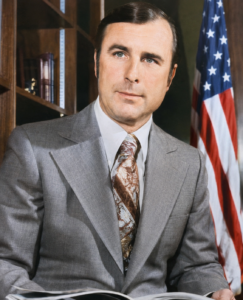 Lawrence F. “Pat” Kramer was one of the most influential mayors in Paterson’s modern history, serving his first term from 1967 to 1971 before returning for a second tenure from 1975 to 1982. A reform-minded Republican, Kramer brought energetic leadership to City Hall during a period marked by urban unrest, economic transition, and sweeping federal urban renewal initiatives.
Born in Paterson on February 24, 1933, Kramer was educated in the city’s public schools before attending Clemson University and later earning a degree from Fairleigh Dickinson University. Before entering politics, he managed the family-owned Lawrence F. Kramer Company and became active in civic affairs through service on the Paterson Board of Education and the City Planning Board.
Elected mayor in 1966 and taking office in 1967, Kramer campaigned on government reform, fiscal responsibility, and revitalizing Paterson’s neighborhoods. His administration modernized municipal government while aggressively pursuing federal assistance for housing, infrastructure, and economic development. Under his leadership, Paterson became one of New Jersey’s designated Model Cities, a federal program aimed at addressing urban poverty through comprehensive neighborhood redevelopment. The city was later selected by President Richard Nixon as one of only twenty Model Cities nationwide to participate in an experimental program granting greater local control over federal funding.
Kramer guided Paterson through the difficult years following the nationwide civil unrest of the late 1960s. His administration emphasized communication between city government, community leaders, and residents while expanding social programs and promoting redevelopment projects designed to strengthen the city’s future. His leadership gained statewide and national recognition, and in 1969 President Richard Nixon appointed him to the Advisory Council on Intergovernmental Relations, making him one of only four American mayors selected to serve on the panel.
In 1969, Paterson voters re-elected Kramer to a second consecutive term, reflecting broad public confidence in his leadership despite the city’s many challenges. In 1971, before completing that term, he resigned after Governor William T. Cahill appointed him Commissioner of the New Jersey Department of Community Affairs, where he oversaw statewide programs involving housing, local government, and community development.
Kramer remained deeply committed to Paterson throughout his public career. He later returned as mayor in 1975, serving until 1982, and played a significant role in promoting preservation of the city’s industrial heritage, efforts that ultimately contributed to the recognition of the Great Falls as one of Paterson’s most important historic landmarks.
Lawrence F. “Pat” Kramer is remembered as a visionary civic leader whose commitment to reform, urban redevelopment, and historic preservation helped shape modern Paterson. His two mayoral administrations left a lasting legacy of governmental modernization, expanded federal investment, and renewed confidence in the city’s future.