Home – History – Designations – Present – Future – Photo Gallery – How you can help – In The News – Contact Us
The Van Houten house represents the period of early Dutch settlement in Passaic County and New Jersey. Since 1609, Dutch settlers thrived as an agricultural community, as they cultivated their farms and expanded their land holdings. Some Dutch families – including the Van Houtens – were enslavers who deployed enslaved Africans throughout their farm and domestic work to add value and profit to their agricultural products that were cultivated for sale at market. Like most early Dutch settlers, the Van Houten family purchased land in Totowa and throughout northern New Jersey. The Van Houtens were active entrepreneurs, and they were well known throughout Totowa and the surrounding counties. Their popularity came with the vast amount of land the Van Houtens owned and their intermarriage with another well-off Dutch family, the Ryersons. This expanded control over affairs in the surrounding neighborhoods.
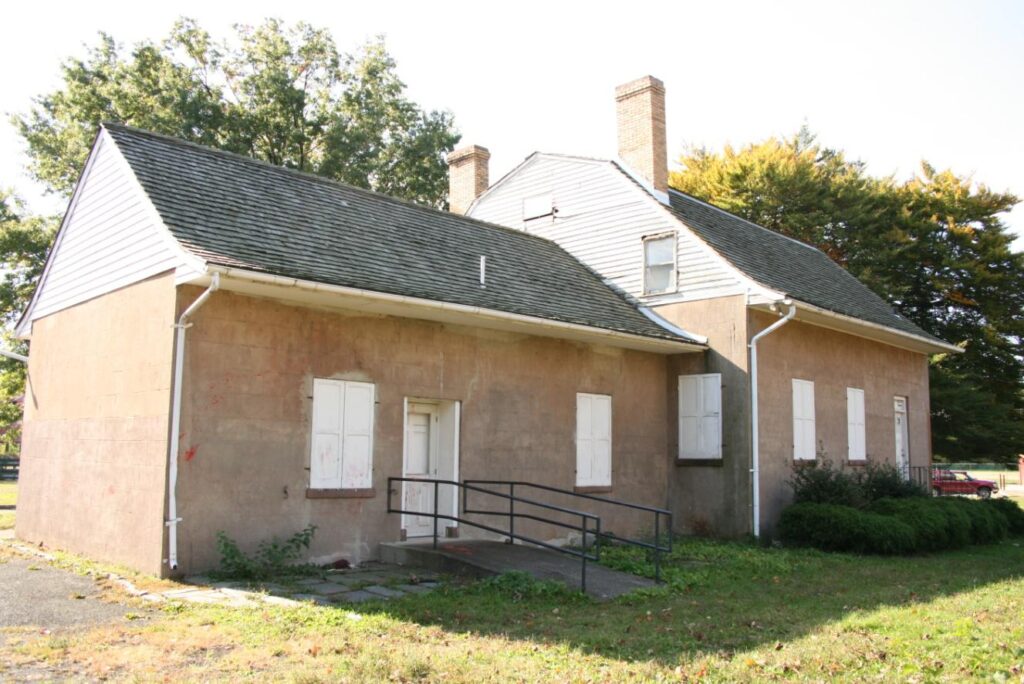
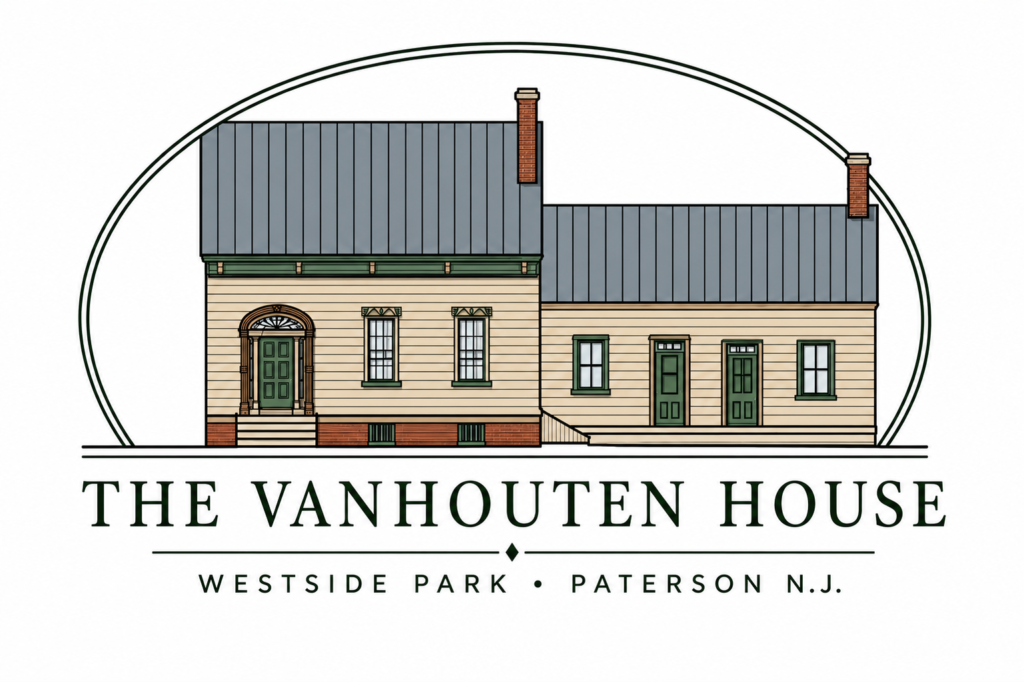
The Van Houtens owned three parcels of land beginning in 1724 which included the Great Falls area. It is believed that around 1741, Garrebrant Van Houten constructed the original structure of the current Van Houten house, which is located in today’s Westside Park. The architectural style of the house is particular the Dutch colonial period. Dutch settlers influenced the style of homes built in New Jersey and New York, building houses with a barn-like appearance. Gambrel roofs, a symmetrical two-sided roof with two slopes on each side, and double-doors distinguished these Dutch Colonial homes. Many early Dutch Colonial homes began as small, wood-frame structures that were later expanded upon with more substantial brick or stone additions that were usually made larger than the original wood-framed home. Typically the wood framed original home was adapted to be used for the kitchen, prep area and possibly also for housing enslaved cooks and domestic servants.
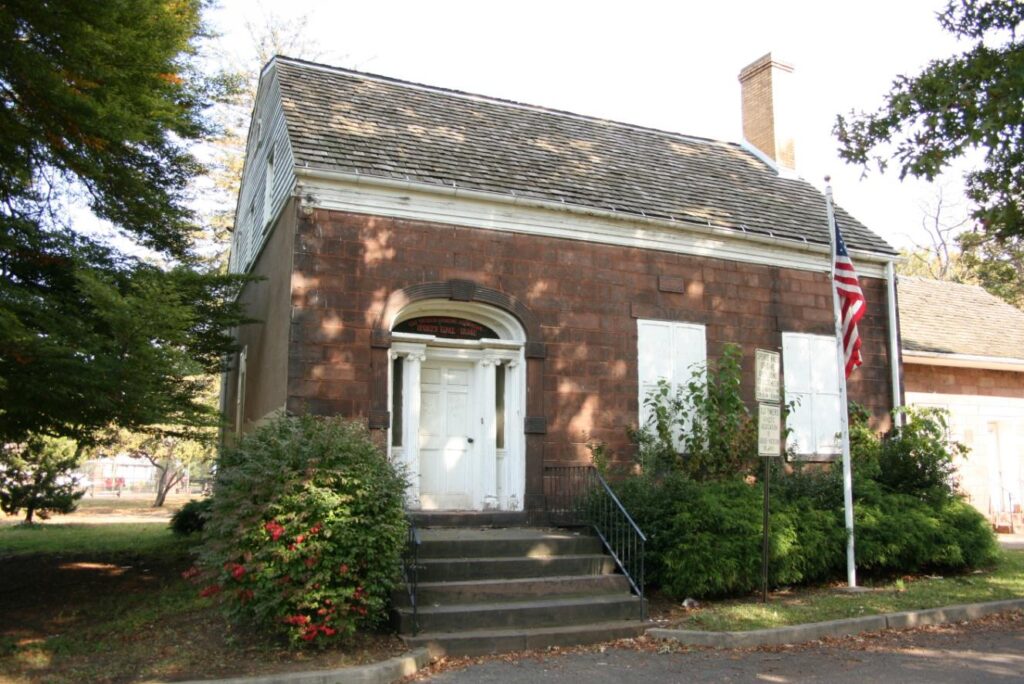
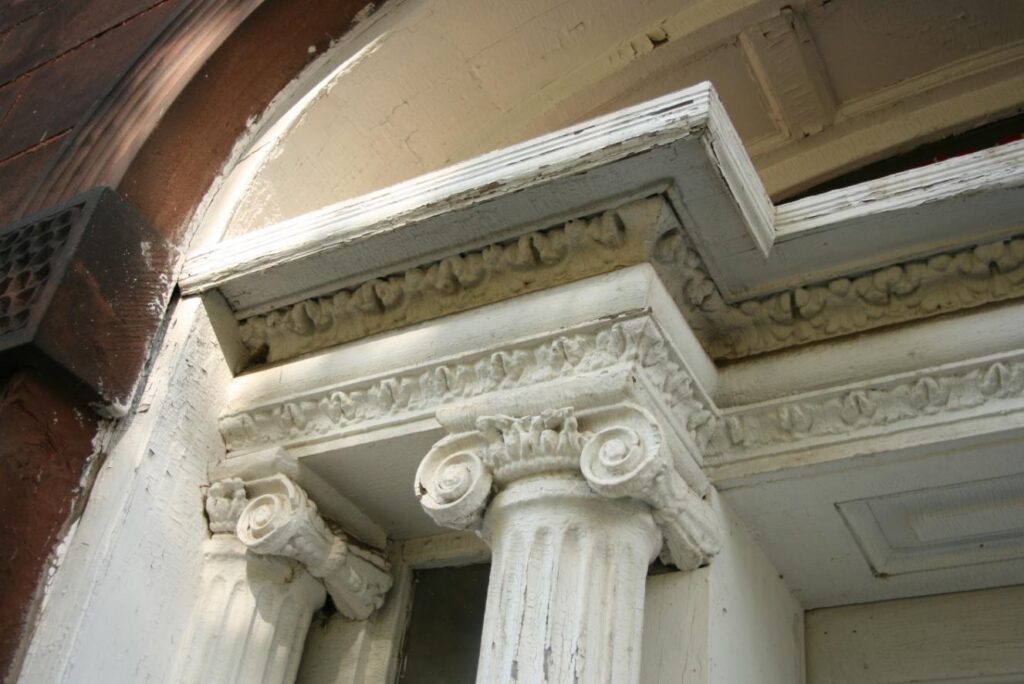
The present original wood-framed building was constructed as a one story with two rooms. When Garrebrant Van Houten died, he willed the home and property to his son Dirick Van Houten II, who lived in the house during the American Revolution. It was between 1778 and 1780 that General George Washington made it a point to spend a night or so with the Van Houtens. Washington passed through Passaic County numerous times, according to maps constructed by Surveyor-general Robert Erskine. These maps have indicated Washington’s stay with the Van Houtens. In 1810 Dirick Van Houten II died and left the estate to his son Adrian Van Houten, who rebuilt the house in 1831. Based on historic documentation, Adrian rebuilt the home because a fired burned down most of the original structure except for the kitchen area. The rebuild indicated a slight change in Dutch architectural style at the beginning of the 19th century. Although considered Dutch Colonial, the new Van Houten house had been influenced by French colonial architecture. The exterior of the 1831 section was constructed as a two-story brownstone with an attic under a gambrel roof. The original 1741 portion that escaped the fire continued to be used as the kitchen and prep area. The doorway is framed by fluted Ionic columns topped with a stone pediment.
When Adrian Van Houten died in 1855, his estate was purchased by the Society for Establishing Useful Manufacturers (S.U.M). Established by Alexander Hamilton in 1791, the purpose of the S.U.M was to promote water powered manufacturing to promote trade and labor expansion and foster United States’ independence from foreign countries. When purchasing the Van Houten property, the S.U.M devised an urban plan for the city of Paterson to benefit production of manufacturing through the use of water power. During its establishment, the S.U.M purchased about 700 acres surrounding the Great Falls, naming it Paterson and creating the new nation’s “first planned industrial city.”
By the 1870s, the S.U.M sold much of the Van Houten property and the house to the S.U.M director Richard Rossiter. He and his family used the land to farm. Later the Van Houten House and the remaining property were purchased by the City of Paterson for the purpose of developing a large public park that everyone still uses today. Westside Park was formally designed and developed by the City of Paterson into a beautiful, landscaped park typical of the turn of the century period. The Van Houten House continued to remain in the park and was occupied for a period as a residence for Paterson’s Parks Superintendent. Much later, the City allowed the Paterson Old Timers Sports Association to occupy the building and to host its hall of fame there.
A major hurricane in 2011 caused the Passaic River to flood, spreading over Westside Park and filling the Van Houten House basement, destroying the heating and electrical systems. This made it impossible for the building to be occupied and the Old Timers left the building for a different one. The City of Paterson later renewed the electrical service and restored the boiler to minimum operating standards enough to upkeep the building. Beginning in 2017, the City’s Division of Historic Preservation utilized grant funding to create a preservation plan, followed by two additional grants from the NJ Historic Trust and the Passaic County Historic Preservation and Open Space Trust Fund to create construction drawings and to move forward with rehabilitation of the building. Before this work could begin, however, on July 4th, 2019, vandals entered the house and started a fire in the front hall that tore upstairs and into the second story, attic and roof of the building. Although the Paterson Fire Department was quick to respond and stopped the fire from consuming the entire building, the fire damage led to the structural collapse of the roof, chimney and portions of the second story. The City of Paterson is currently in partnership with the County of Passaic and utilizing grant funding to stabilize the building and plans to restore it completely for reuse as a cultural center.